Grandma Mae talked to her garden the way some people talk to an old friend.
Not loudly, not dramatically. She didn’t stand in the yard making big speeches to the tomato plants. She didn’t expect the beans to clap for her.
She spoke softly, mostly under her breath, as she worked.
“Well now,” she’d murmur, patting soil around a seedling, “let’s see what you make of yourself.”
Or, “All right, my dears. Drink up,” as she watered.
Or sometimes, when the wind picked up, she’d say, “Easy now. No need to fuss.”
The garden listened.
It listened the way gardens do—quietly, steadily, without interrupting.
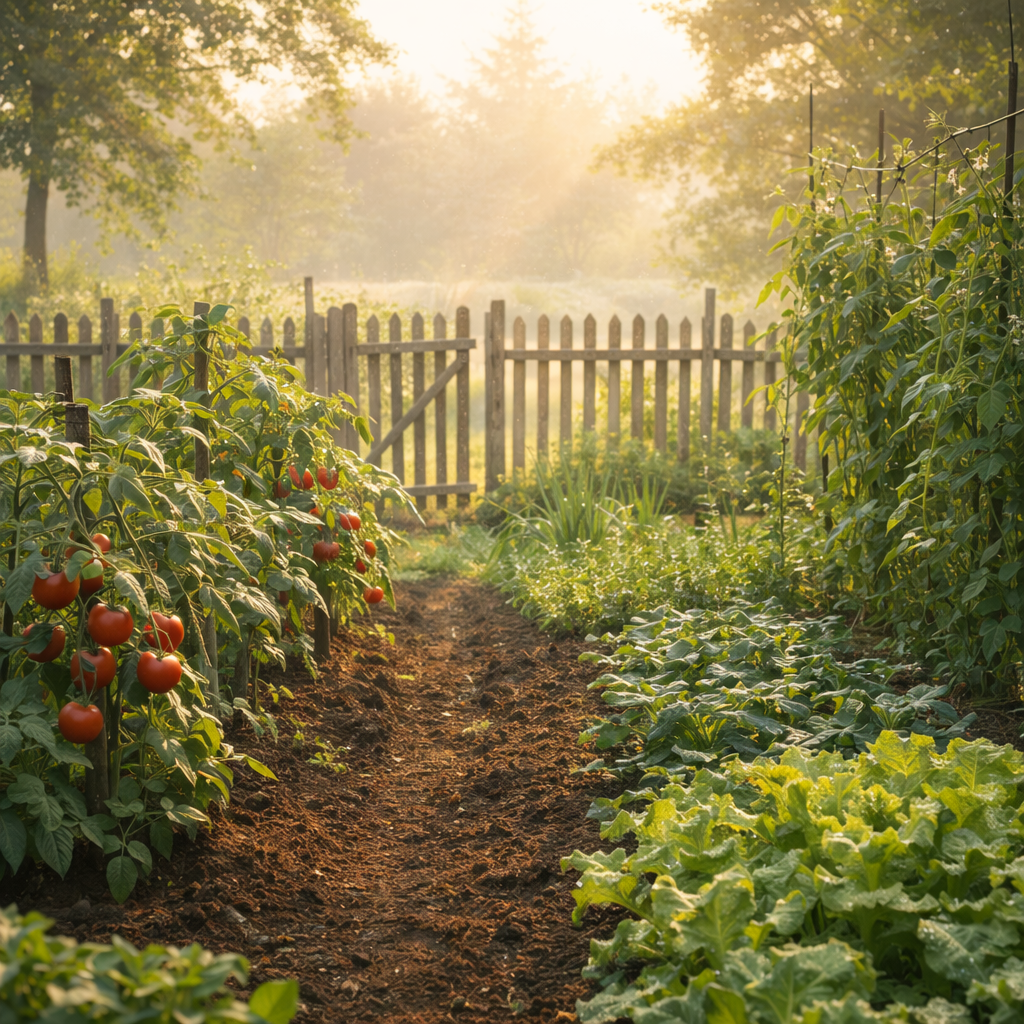
Mae’s garden sat behind her house, a neat patch of earth bordered by a weathered fence. The gate had a little sag to it, and the latch made a click that every grandchild knew. The path through the garden was made of stepping stones, each one slightly crooked, as if it had settled into place over many seasons.
In early spring, Mae would kneel in the cool soil and press seeds into the earth like she was tucking them into bed.
“There you go,” she’d whisper. “Rest a while.”
Then she would wait.
Waiting is what gardens are made of.
Waiting, and trusting.
When the first green shoots appeared, Mae would smile like she had been given a secret.
“Oh,” she’d say quietly. “There you are.”
The garden heard her happiness.
It also heard her worries.
Mae didn’t worry loudly. She didn’t stomp around complaining.
But sometimes, as she pulled weeds, she’d speak to the soil as if it were safe enough to hold her thoughts.
“Prices are going up again,” she might say. “I don’t know how folks are supposed to manage.”
Or, “I hope your grandpa’s back doesn’t bother him too much today.”
Or, on the hard days, simply, “Lord, help me.”
The garden listened.
And in the way of gardens, it answered with small things.
A new bloom.
A stronger vine.
A tomato that ripened bright and red as a little lantern.
Mae’s granddaughter, Emma, spent many summers at that house. She learned the garden’s language without realizing it. She learned that you didn’t stomp near the seedlings. You didn’t yank weeds angrily—you loosened them gently. You didn’t rush the cucumbers.
“Plants can tell when you’re in a hurry,” Mae would say. “They don’t like it.”
Emma didn’t know if that was true, but she liked believing it.
And she liked being in the garden, because it felt like the one place where time moved the way it was supposed to.
Slowly.
Kindly.
Like a lullaby.
When Mae grew older, she moved slower too.
Her knees didn’t love the bending anymore. Her hands stiffened in the mornings. But she still came out every day.
Even if she only stood by the fence for a moment, looking over her rows like a captain checking her ship.
“Morning,” she’d say to the garden, as if greeting a friend.
The garden listened.
Then, one year, Mae didn’t come out at all.
It happened quietly, the way winter happens. One day she was there, humming as she watered, and then suddenly, she wasn’t.
After the funeral, people came by with casseroles and careful voices. They hugged. They sighed. They said things like, “She lived a good long life,” as if saying it could stitch up the hole she left behind.
The house felt strange without her.
But the garden felt stranger.
The garden waited.
Mae’s daughter tried to keep it going that summer. She watered, mostly. She pulled a few weeds. But she didn’t talk to the plants, and she didn’t linger.
The garden grew anyway, but not with the same confidence.
The tomatoes drooped. The beans climbed slowly. The soil seemed to miss Mae’s hands.
By late summer, Emma came back for a visit.
She walked through the yard and saw the garden sitting there, half-wild now, as if it wasn’t sure who was in charge.
The gate still sagged. The latch still clicked.
Emma stepped inside.
At first, she just stood there.
The air smelled like warm dirt and sun-baked leaves. A bee moved lazily from flower to flower. The garden was alive, but it felt lonely.
Emma swallowed.
“I don’t know what I’m doing,” she admitted out loud.
The words surprised her. She hadn’t meant to speak, but the garden had always felt like the place where truth came out.
The garden listened.
Emma knelt and touched the soil.
It was dry. Not terribly dry—just dry enough to show neglect.
She found the watering can, filled it, and began to water slowly, letting the water soak in rather than run off.
She pulled weeds, gentle and patient, the way Mae had shown her. She loosened soil around the stems. She looked closely at leaves the way Mae used to, as if the plants were trying to tell her something.
And without thinking, she began to talk.
Not a lot.
Just a little.
“I miss you,” she whispered, though she wasn’t sure if she meant Mae or the way Mae made the world feel.
The garden listened.
Emma came back the next day.
And the next.
Some days she spoke. Some days she didn’t. But she stayed longer each time.
The garden responded in small ways.
A vine straightened.
A flower opened.
A tomato began to blush red again.
By late fall, the garden looked like itself—not exactly Mae’s version, not perfectly tidy, but alive and steady.
Emma stood by the gate one evening, the air cooling, the sunlight turning honey-colored.
She heard Mae’s voice in her memory, soft and calm:
“Everything that matters takes time.”
Emma smiled.
“I know,” she whispered.
The garden listened.
It always had.
And it always would.