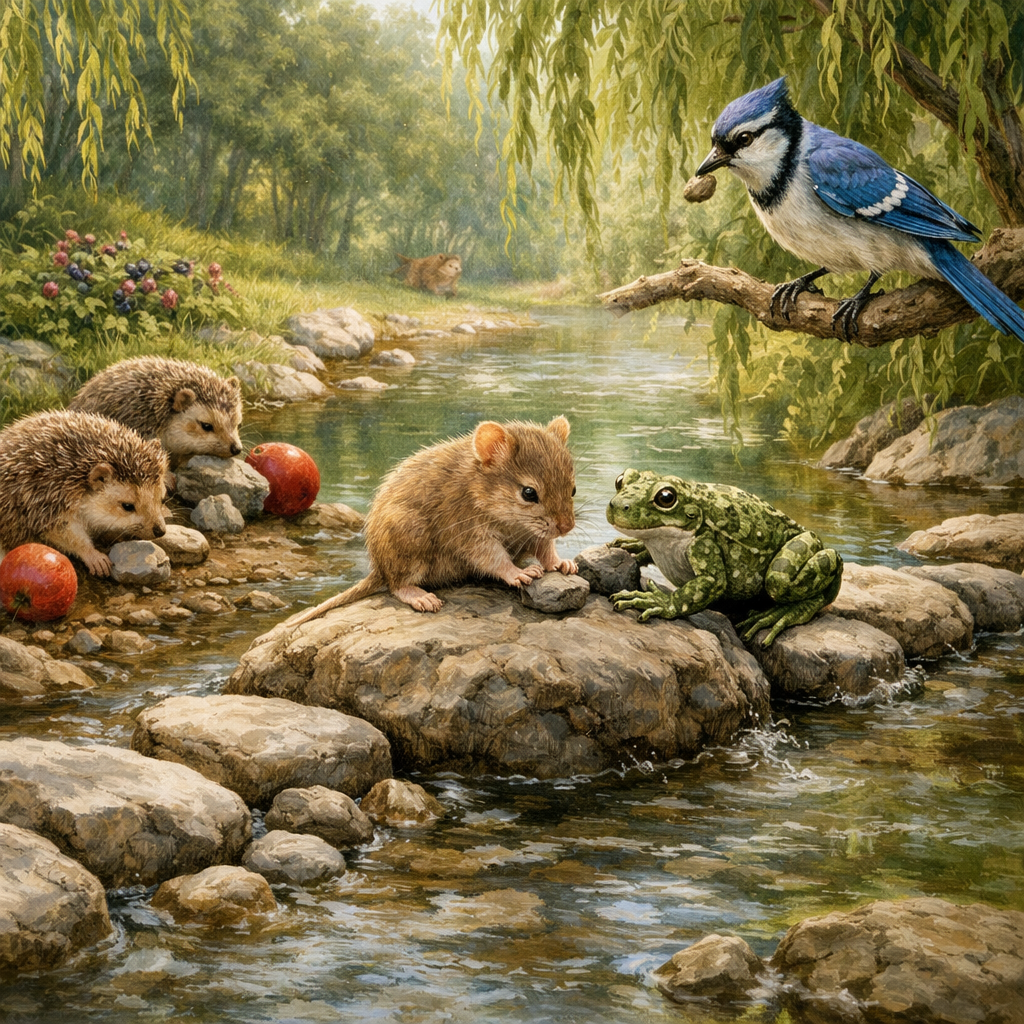
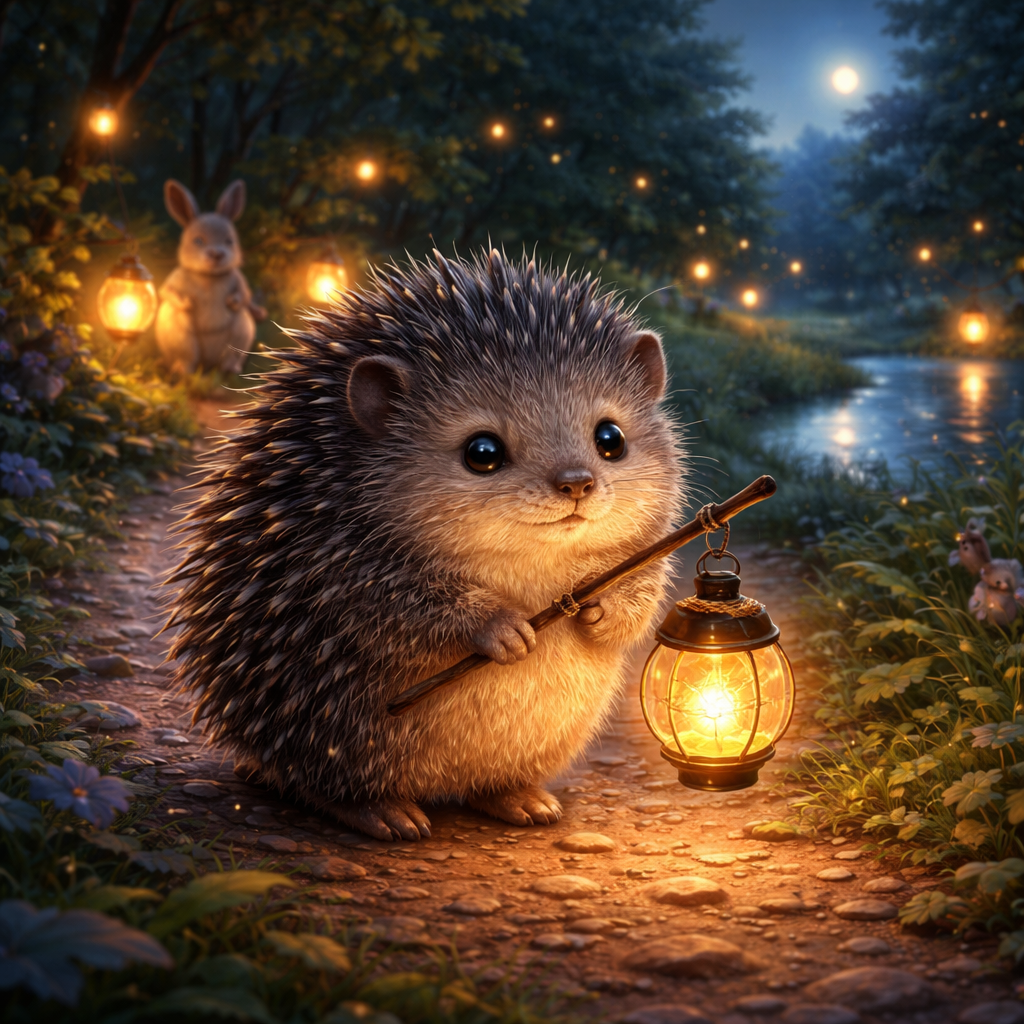
In a quiet meadow where the grass bent softly in the evening breeze, there lived a little porcupine named Thistle. Thistle was small, round, and covered in neat, silvery quills that shimmered like moonlight when the sun began to set. The meadow was a peaceful place filled with crickets, fireflies, and winding paths that led to friendly burrows and hollow logs. It was a place where many creatures felt at home.
Thistle loved the meadow deeply, but there was one thing that often made his paws feel tingly and his heart flutter a little too fast. New things made him nervous.
Each morning, the animals gathered near the old oak tree to share stories, play gentle games, or help one another with small tasks. Thistle always watched from a short distance, his bright eyes full of curiosity. He wanted to join in, but his thoughts sometimes buzzed louder than the bees drifting by. What if he tripped? What if his quills poked someone by accident? What if he wasn’t very good at what he tried?
So Thistle often stayed close to the familiar clover patch, rolling a smooth pebble back and forth and telling himself that watching was enough.
One afternoon, a soft murmur of excitement spread through the meadow. The animals were planning something special: a twilight lantern walk. As the sun dipped low, everyone would follow the winding path through the meadow, carrying glowing lanterns made from firefly light and polished leaves. It was meant to be slow and peaceful, ending at the pond where the moon liked to rest.
Thistle’s heart fluttered again. The path to the pond curved gently, but it passed through places he had never walked before. Still, something warm stirred inside him. The lantern walk sounded beautiful.
As evening arrived, the meadow glowed softly. Lanterns bobbed like tiny stars as the animals gathered. Thistle stood at the edge, his paws tucked close, his quills trembling just a bit. The path seemed longer than usual, and the shadows looked deeper.
But then Thistle noticed something small and steady—his own breathing. In and out, slow and quiet. The meadow hadn’t changed. The grass was still kind beneath his feet. The air still smelled of lavender and moss.
Thistle took one careful step forward.
Nothing bad happened.
He took another step, then another. The lantern light reflected in his dark eyes, and the path no longer felt quite so long. With each step, the nervous flutter softened, like a breeze settling at dusk.
Along the way, Thistle paused to help a beetle turn over a lantern that had tipped sideways. He listened to the gentle hoot of an owl overhead. He noticed how his quills caught the light, turning silvery and calm.
By the time the pond came into view, Thistle felt something new resting beside his nerves. It was quiet pride.
The moon shimmered on the water, and the lanterns floated their reflections across the surface. Thistle sat near the edge, feeling the cool earth beneath him. He realized that being nervous had not stopped him. It had simply walked along beside him, growing smaller with every brave step.
When the lanterns dimmed and the animals slowly returned home, Thistle followed the path back through the meadow. The clover patch greeted him like an old friend, but it felt different now. The world felt a little wider, and Thistle felt a little taller.
That night, curled up in his cozy burrow, Thistle listened to the sounds of the meadow settling into sleep. The stars blinked gently overhead, and the nervous thoughts that once buzzed so loudly now rested quietly, like fireflies at dawn.
Thistle drifted into sleep knowing something important and true: even when nerves were present, belief could shine brighter—and one small, brave step was always enough.