
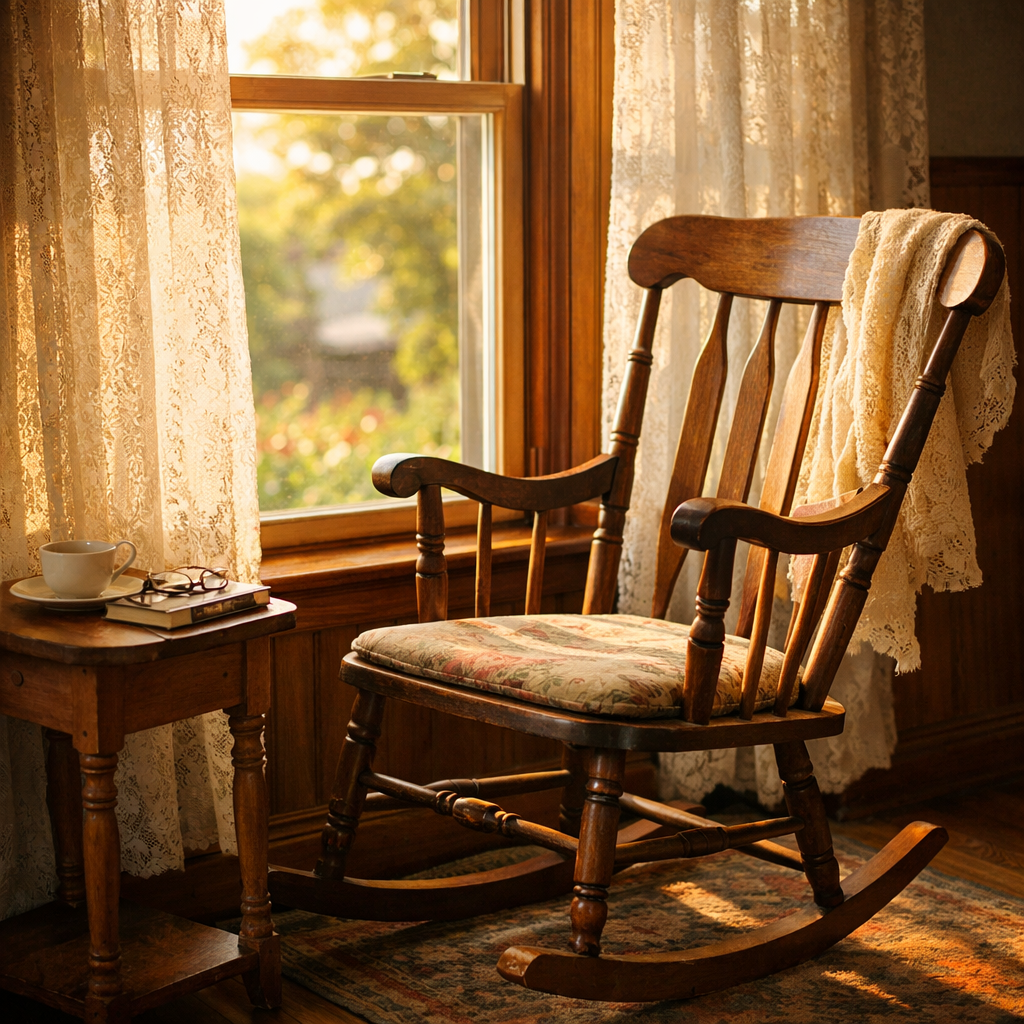
The chair by the window had been there longer than anyone could remember.
It wasn’t fancy. It didn’t match the rest of the furniture very well, and one of its rockers was worn thinner than the other. But it had always been there, angled just so, catching the late afternoon sun as it slid across the living room floor.
Grandma Eleanor had placed it there herself.
She said it was the best spot in the house—not because it was comfortable, though it was—but because from that chair, she could see everything that mattered.
From the window, she watched the seasons arrive and leave again. In spring, she counted blossoms drifting down from the old apple tree. In summer, she watched fireflies blink on one by one at dusk, as if someone were slowly turning on stars. In fall, she noticed when the leaves first began to turn, and in winter, she watched snow soften the edges of the world.
The chair rocked gently through all of it.
It rocked when babies cried and when they finally fell asleep against her shoulder. It rocked when Eleanor hummed old songs that no one else remembered the words to anymore. It rocked while she shelled peas into a tin bowl, the soft tap-tap of each pea joining the steady ticking of the clock on the wall.
Some days, the chair barely moved at all.
Those were the thinking days.
On those afternoons, Eleanor sat with her hands folded in her lap, staring out the window without really looking at anything. The chair would be still, as if it knew not to interrupt. Anyone who entered the room during those moments learned quickly to move quietly.
The chair understood patience.
When Eleanor grew older, the rocking slowed. Her hands didn’t work quite as fast, and sometimes she forgot why she had stood up in the first place. But the chair remained steady, waiting for her every time.
And then, one winter morning, Eleanor did not return to it.
The house grew strangely loud after that.
The refrigerator hummed too much. The pipes knocked in ways no one remembered hearing before. Even the floorboards seemed to creak more often, as if confused about where to step.
But the chair stayed exactly where it was.
People came by to help. Family members opened drawers, sorted papers, folded clothes. Someone suggested rearranging the living room to make it feel “fresh.”
They all stopped when they looked at the chair.
“No,” someone said quietly. “Not that.”
So the chair stayed.
Lucy, Eleanor’s granddaughter, noticed something else. No one ever sat in it.
They walked around it. They placed coats over other chairs. They stood instead of sitting. It was as though the chair had become something more than furniture.
One afternoon, Lucy came by alone.
She was old enough now to notice how silence could feel heavy. She folded laundry at the table, the sound of fabric against fabric filling the room. When she finished, she lifted the basket and looked around for a place to set it.
Without thinking, she placed it in the chair.
The room felt wrong immediately.
Lucy froze. She laughed nervously, feeling silly, and quickly moved the basket. She pushed the chair back into its exact spot, adjusting it by inches until the sunlight fell just right again.
Only then did the room seem to settle.
Lucy didn’t know why that mattered—but it did.
Days later, she returned.
This time, she stood in front of the chair for a long moment. The house was quiet. The clock ticked. Dust floated lazily through the sunlight.
Slowly, Lucy sat down.
The chair creaked softly—not loudly, not sharply—just enough to announce that it remembered how to do this. Lucy rocked once. Then again. The motion felt familiar, even though she couldn’t remember sitting there before.
The sunlight warmed her knees.
She didn’t mean to speak. The words simply arrived.
She talked about school. About friends who had changed. About feeling unsure in ways she couldn’t explain to anyone else. Her voice was quiet, but the room listened.
She talked about missing her grandmother—not just missing her, but missing the way everything felt simpler when Eleanor was there.
The chair rocked gently.
Lucy wiped her eyes and laughed at herself. “You’d know what to say,” she whispered.
The chair did not answer.
It didn’t need to.
Lucy stayed until the light shifted and the room grew dimmer. When she stood, her chest felt lighter, as if something heavy had been set down without her noticing.
She didn’t tell anyone about that afternoon.
But she came back.
Over time, the chair heard many stories. It heard worries whispered late at night. It heard laughter when memories turned sweet. It heard quiet promises and difficult questions.
Years passed.
Lucy grew up. She moved away. She came back again.
When she brought her own children to the house, they noticed the chair too.
“Why don’t we sit there?” one asked.
Lucy smiled. “You can,” she said. “When you need to.”
They learned quickly.
The chair was where you went when you didn’t quite know how you felt yet. It was where you sat when the world seemed too fast or too loud. It was where you learned that some things don’t need fixing—just time.
On quiet evenings, when the house settled into sleep, the chair rested by the window, catching the last of the fading light.
Waiting.